Organisations regularly face situations that require change, whether introducing new technology, restructuring departments, or improving operational efficiency. While change can create opportunities for growth, it often brings resistance and uncertainty. For this reason, businesses need practical methods to evaluate challenges and understand the factors that support or hinder change initiatives.
One widely recognised framework for managing organisational change is Lewin’s force field analysis. Developed by psychologist Kurt Lewin, the model helps businesses examine the forces that influence a proposed change. By identifying both positive and negative factors, organisations can make more informed decisions and improve the likelihood of successful implementation.
The model remains highly relevant in modern business because it encourages structured thinking, collaboration and strategic planning. Whether used in project management, organisational development or leadership decision-making, the approach can help businesses understand the dynamics of change more clearly.
Understanding Lewin’s Force Field Analysis
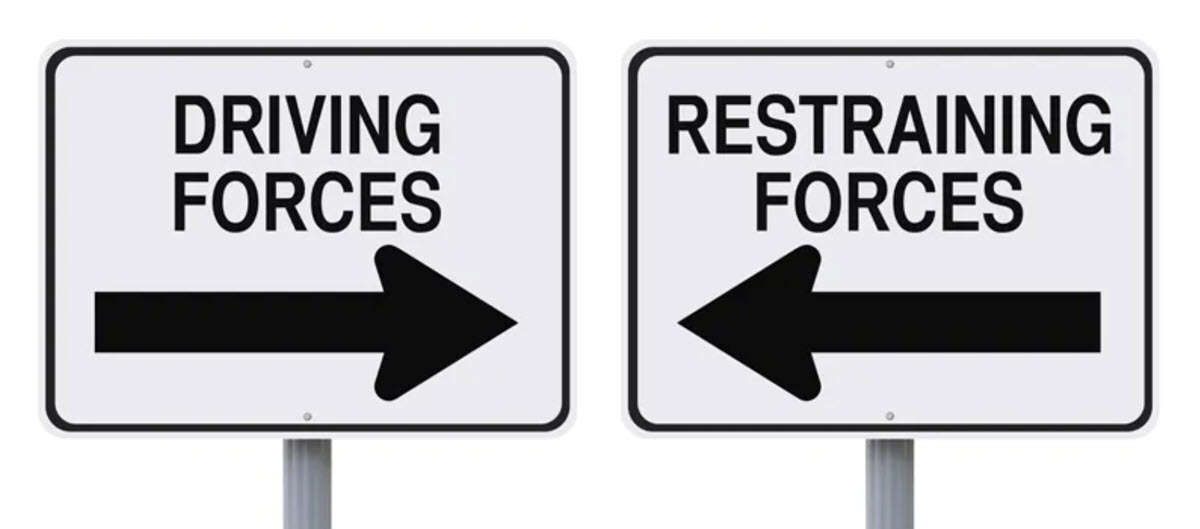
Lewin’s force field analysis is based on the idea that every situation is influenced by opposing forces. Some forces drive change forward, while others resist or slow progress. According to Lewin, successful change occurs when the driving forces are strengthened or the restraining forces are reduced.
Driving forces are factors that encourage change. These may include increased competition, technological advancements, customer demand, cost reduction opportunities or leadership support. Such forces create momentum and motivate organisations to move towards a desired outcome.
Restraining forces, however, act as barriers to change. Examples may include employee resistance, lack of resources, fear of uncertainty, inadequate training or organisational culture. These forces can slow implementation and create obstacles that prevent successful progress.
The purpose of the model is to identify and analyse these competing influences before implementing a change initiative. By understanding the balance between driving and restraining forces, businesses can develop more effective strategies.
The process is often visualised using a simple diagram. Driving forces are listed on one side of the proposed change, while restraining forces are placed on the opposite side. Each factor may be assigned a score based on its strength or impact. This visual representation helps organisations assess whether change is realistically achievable and where improvements may be needed.
One reason the model remains popular is its simplicity. Unlike highly technical management frameworks, the analysis can be applied across different industries and organisational sizes without requiring complex calculations or specialist software.
Benefits of Applying Lewin’s Force Field Analysis
Applying Lewin’s force field analysis can provide several advantages for organisations managing change.
One major benefit is improved decision-making. Businesses often rush into change initiatives without fully understanding the factors that may influence success or failure. The analysis encourages managers to evaluate situations carefully before taking action.
The model also promotes better communication and collaboration. Since the process often involves gathering input from employees, managers and stakeholders, organisations can gain a wider range of perspectives. This collaborative approach may improve employee engagement and reduce resistance to change.
Another important advantage is risk identification. By recognising restraining forces early, businesses can prepare strategies to address potential challenges before they become serious problems. This proactive approach helps reduce uncertainty and improve planning.
The framework can also improve resource allocation. Organisations are better able to identify where additional support, training or investment may be required to strengthen driving forces and reduce obstacles.
In addition, the analysis encourages strategic thinking. Rather than focusing only on short-term objectives, businesses are encouraged to consider the broader organisational environment and the long-term implications of change.
Employee morale may benefit as well. Change initiatives often create anxiety among staff members, particularly when communication is poor. Involving employees in the analysis process can help individuals feel heard and valued, increasing acceptance of organisational changes.
Furthermore, the model is highly adaptable. It can be used for a wide variety of situations, including mergers, process improvements, digital transformation projects and leadership changes. This flexibility makes it a valuable tool for businesses across different sectors.
Steps for Conducting Lewin’s Force Field Analysis
Successfully applying Lewin’s force field analysis requires a structured and thoughtful approach.
The first step is clearly defining the proposed change. Businesses should identify the specific objective they wish to achieve, whether improving productivity, introducing new systems or changing organisational structures.
Once the goal is established, organisations should identify the driving forces supporting the change. These may include market opportunities, customer expectations, financial benefits or strategic priorities. Each driving force should be carefully examined to determine its influence on the proposed initiative.
The next step involves identifying restraining forces. Businesses should consider all factors that could slow or prevent progress. Common examples include employee concerns, budget limitations, lack of expertise or operational disruptions.
After listing the forces, organisations often assign numerical values to indicate the strength of each factor. This scoring process helps managers compare the influence of different forces and identify which areas require the most attention.
The analysis should then focus on developing strategies to strengthen driving forces and reduce restraining forces. For example, if employees resist a new technology system due to lack of confidence, additional training and communication may help reduce resistance.
It is also important to involve relevant stakeholders throughout the process. Employees, managers and external partners may provide valuable insights that improve the accuracy and effectiveness of the analysis.
Regular review and monitoring are equally essential. Organisational conditions can change over time, meaning forces influencing the situation may also evolve. Reviewing the analysis periodically allows businesses to adapt strategies and respond to new challenges.
Although the process appears straightforward, its effectiveness depends on honest evaluation and open communication. Organisations that fail to identify important restraining forces may struggle to achieve successful outcomes.
Challenges and Limitations of the Model
While Lewin’s force field analysis offers many benefits, businesses should also recognise its limitations.
One challenge is subjectivity. The process often relies on personal judgement when identifying and scoring forces. Different individuals may interpret situations differently, which can affect the accuracy of the analysis.
Another limitation is that the model may oversimplify complex organisational situations. Some change initiatives involve multiple interconnected factors that cannot always be fully represented within a basic force field diagram.
Resistance to participation can also create difficulties. Employees may hesitate to share concerns openly, particularly if they fear criticism or negative consequences. Businesses must create an environment where honest feedback is encouraged.
The model may also require significant time and discussion, especially within large organisations. Gathering stakeholder input and evaluating competing forces thoroughly can slow the decision-making process.
External factors can present additional complications. Economic conditions, regulatory changes or unexpected market disruptions may alter the balance of forces quickly, making earlier assessments less reliable.
Despite these limitations, the framework remains highly valuable when used appropriately. Businesses that combine the analysis with other strategic planning tools often gain a more comprehensive understanding of organisational change.